
Why Cities Should Hire More Developers

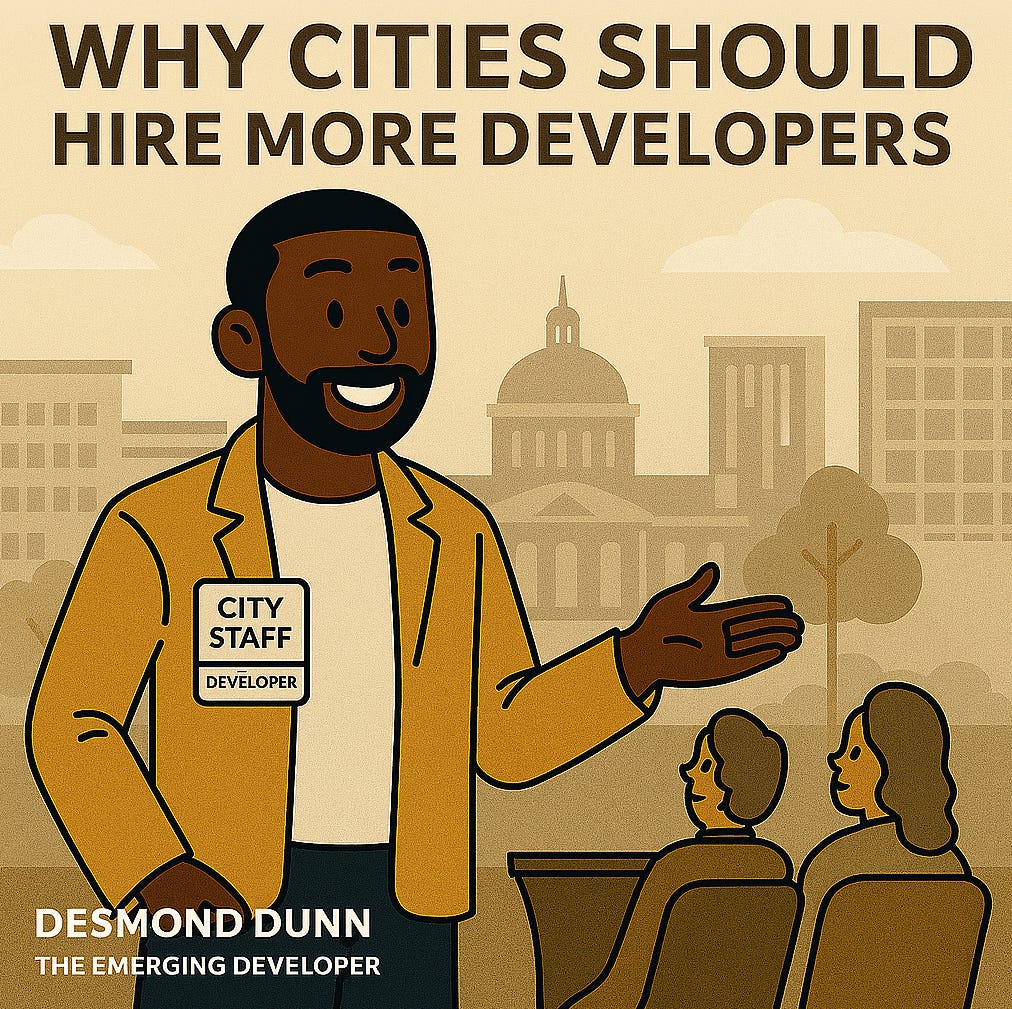
Over the past few years, I’ve sat in city meetings, planning sessions, RFP reviews, and community engagement working groups. And one thing keeps becoming clear:
Cities have big housing goals. But very few people inside city government have actually built housing.
That disconnect matters. A lot.
Cities are underfunded, understaffed, and often stretched thin across dozens of priorities. Meanwhile, the pressure to deliver affordable housing……fast……keeps growing.
We’ve got timelines. Targets. Mandates. But the actual mechanics of development? That’s still largely outsourced.
And here’s the problem: consultants can advise. But they can’t execute.
The Case for In-House Development Talent
First, let me say this: I have deep respect for public servants. City staff are working tirelessly to solve complex challenges, often with limited resources and political pressure on all sides. I’ve seen it firsthand, especially in Raleigh, where planning staff, housing teams, and community engagement leads are innovating and listening in ways that many cities should be learning from.
This article isn’t a critique. It’s an invitation.
Imagine if every city had:
A small-scale developer on staff who knows how to move a project from vision to ribbon cutting
A contractor who understands pricing, phasing, and procurement
A planner who’s actually worked on mixed-use sites, not just read the code
This isn’t about replacing existing teams. It’s about strengthening them.
We need practitioners inside city hall. People who understand real timelines. Who know how capital stacks work. Who can spot design flaws early. Who can translate a community’s vision into a phased, fundable, buildable reality.
The cities with the most ambitious housing agendas need builders at the table. Not just as stakeholders, but as staff.
What This Could Unlock
When cities hire people with real-world development experience, you start to see things shift:
RFPs become more realistic
Engagement gets deeper because staff understand trade-offs
Partnerships run smoother
Delays shrink because the team can problem-solve proactively
It’s not about speeding through community voice. It’s about knowing how to make it real.
I’ve watched city teams spend months circling on language, process, or design. Not because they don’t care, but because they don’t have enough people who’ve built before.
A Talent Pipeline for Equitable Development
Here’s the other opportunity: hiring small developers into city roles helps diversify who gets to shape our built environment.
There are talented BIPOC developers, contractors, and planners out there right now who are underleveraged or boxed out of larger deals. Bring them in. Invest in them. Let them help shape a better process from the inside.
Let’s not just say we want equitable development. Let’s hire for it.
Closing Thought
If we want cities to build faster, smarter, and more equitably, we need more than policy. We need practitioners.
Not just on task forces. Not just on calls. On staff. In the room. With decision-making power.
Cities need to stop outsourcing the future. They need to build internal capacity to match their ambition.
Hire the people who build. That’s how we build better cities.